Book Review: The Lathe of Heaven
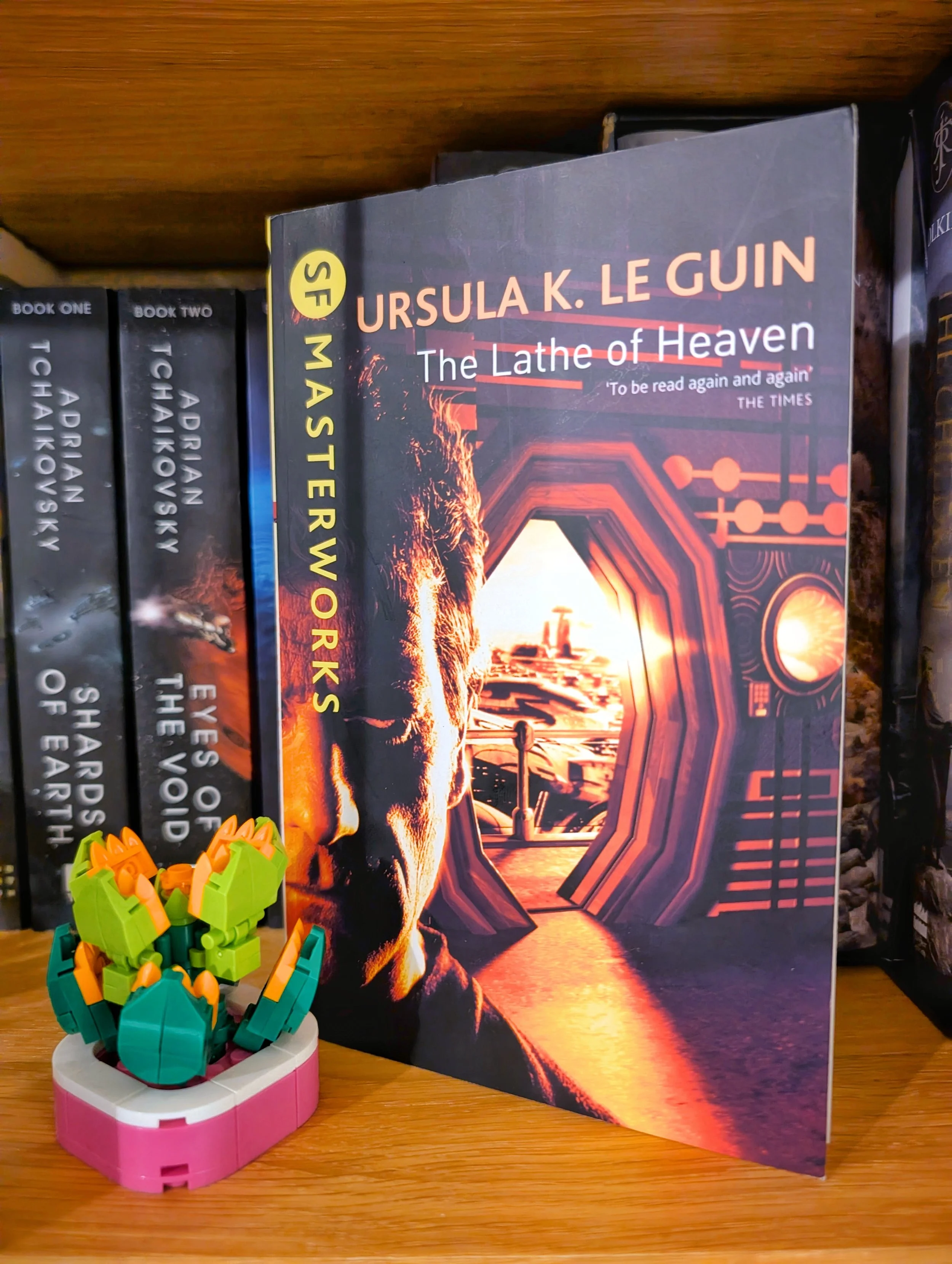
Reading Le Guin again is like returning home…
Any long-time followers of this blog will realise how much I have enjoyed Ursula K Le Guin’s work in the past. She fast became one of my favourite ever authors. At this point I’ve read all of Earthsea, most of the Hainish novels, as well as her sublime book on writing craft. The Lathe of Heaven was highly recommended to me, but I needed no convincing.
Blurb
George Orr is a mild and unremarkable man who finds the world a less than pleasant place to live: seven billion people jostle for living space and food. But George dreams dreams which do in fact change reality - and he has no means of controlling this extraordinary power.
Psychiatrist Dr William Haber offers to help. At first sceptical of George's powers, he comes to astonished belief. When he allows ambition to get the better of ethics, George finds himself caught up in a situation of alarming peril.
Review
The Lathe of Heaven was a wonderful story. Reading it was such a pleasure, and I enjoyed it so much, that I blasted it out in an afternoon (and it’s a longer book than I would normally be able to do that with). I just couldn’t put it down. Reading Le Guin again is like returning home after a long absence. Her prose is buttery smooth and articulate, her concepts and character work are thoughtful and engaging. There are some outdated ideas about the science of dreaming and memory that date the book but the concepts are very well realised.
George Orr is a fascinating and unfortunate character. A bit of a doormat and in a desperate situation, he’s a prime target for abuse and manipulation, especially when he is made so vulnerable by an abusive power asymmetry. It doesn’t take much for Haber to start taking advantage of him, and the gaslighting that follows is positively cosmic in scale. Like in all of Le Guin’s books, the antagonist is never painted as purely a bad person. In fact, Haber is both fascinated by George and really wants to make the world a better place but, as the blurb reads, he allows his ambition to get the better of his ethics. As such he strings George along on the promise of helping him, only to use him to realise his own ends. Worse is that it robs George of his agency and betrays the sacred trust between doctor and patient. George’s power is like a monkey’s paw and the attempt to control the output is misguided at best and disastrous at worst.
I will say I wanted to see more from the aliens that turn up later in the book, because they seemed to have some knowledge of George’s strange powers but this is never elucidated. But the whole ending sequence with Haber getting his comeuppance was very satisfying.
I find that Le Guin’s worlds very rarely ever return back to the way they were when they started. They’re always changed in some profound way by the events of the book and she leaves it open as to whether this is a good or a bad thing.
While I wouldn’t necessarily call The Lathe of Heaven one of my favourites of Le Guin’s works, it was still an excellent read that, like all her other works, will stay with me for years. Unlike some of my other recent reads, I found The Lathe of Heaven actually delivered on the profound commentary on the human condition that the title suggested. I would heartily recommend it.